
Tixel Treatment for Dry Eye Syndrome
Dry eye syndrome is a chronic condition that requires structured management and consistent clinical delivery.
Many dry eye syndrome treatments depend on patient compliance and ongoing symptom control, which often leads to variable outcomes and limited clinical oversight.
Tixel-i dry eye treatment introduces a defined, in-office procedure using Thermo-Mechanical Action technology. It is designed to support ocular surface health and improve tear film stability through controlled, repeatable application.
For practices evaluating the latest treatment for dry eye syndrome, this approach provides a clear treatment pathway aligned with modern, procedure-based care.

Dry Eye Syndrome Symptoms and Clinical Drivers
Common dry eye syndrome symptoms include:
- Ocular dryness and irritation
- Burning or stinging sensation
- Fluctuating or blurred vision
- Foreign body sensation
These symptoms are frequently associated with tear film instability and meibomian gland dysfunction, a key underlying factor in evaporative dry eye.
Effective dry eye syndrome treatments must address these mechanisms, not only provide temporary symptom relief.

Limitations of Conventional Dry Eye Syndrome Treatments
Traditional dry eye syndrome treatments often rely on:
- Daily patient adherence
- Long-term use of lubricants or medications
- Seeking care from multiple providers
A structured alternative requires:
- In-office procedures
- Clinician-controlled application
- Defined treatment protocols
This approach can lead to inconsistent results and limited control over treatment delivery.
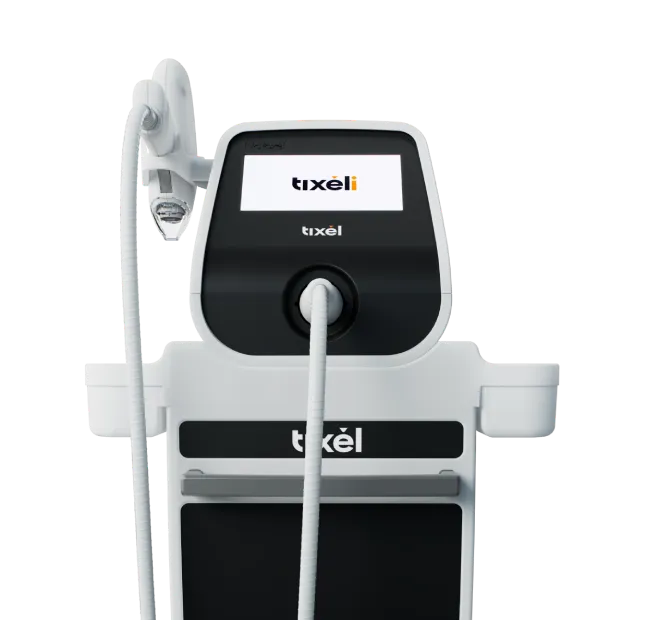
Tixel-i Dry Eye Treatment: Technology and Delivery
Tixel dry eye treatment is performed using the Tixel-i device, a non-laser dry eye device designed for evaporative dry eye associated with meibomian gland dysfunction.
The system delivers controlled thermal energy to the eyelid using Thermo-Mechanical Action.
- Contact-based thermal delivery
- Pulse duration in milliseconds
- No light-based energy or absorption variability
- No contact with the eyeball
Energy is applied through a proprietary titanium tip, supporting controlled, fractional treatment and simplified clinical hygiene.
This method enables consistent application across patients without dependence on optical parameters.
What the Treatment Looks Like in Practice
The procedure is designed for efficiency and standardization.
- Approximately 2 minutes for both eyes
- Treatment of upper and lower eyelids
- Approximately 40 pulses delivered per treatment
- Delivered as a series of three sessions spaced two weeks apart
This protocol supports consistent delivery and aligns with structured dry eye syndrome treatments used in clinical practice.
Supporting Tear Film Stability and Gland Function
Evaporative dry eye is commonly linked to dysfunction of the meibomian glands.
Tixel-i dry eye treatment supports:
Meibomian gland activity
Tear film stability
Reduction in tear evaporation
By targeting the eyelid, the procedure addresses one of the primary drivers behind persistent dry eye syndrome symptoms.

Consistency and Repeatability in Treatment
A key challenge in managing dry eye syndrome is maintaining consistent outcomes over time.
The Tixel-i device is designed for repeatable delivery:
- Controlled thermal pulses with each session
- Standardized protocols across patients
- Defined timing between treatments
This supports consistent clinical performance and allows for more effective tracking of patient response.
A Structured Pathway for Ongoing Management
Dry eye syndrome requires ongoing care rather than a single intervention.
Tixel-i dry eye treatment supports a defined treatment pathway:
- Initial treatment series based on clinical assessment
- Follow-up sessions as needed
- Integration into long-term management strategies
This positions it within modern dry eye syndrome treatments focused on continuity and control.


Designed for Routine Clinical Use
Treatment adoption improves when procedures are efficient and easy to integrate.
The Tixel-i device is designed for daily clinical use:
- Short in-office treatment sessions
- Minimal preparation requirements
- No single-use consumables
- Quick turnaround between patients
This allows clinics to deliver dry eye syndrome treatments at scale without increasing operational complexity.
Integration Within Modern Dry Eye Care
Dry eye management is shifting toward procedure-based, in-office solutions.
Tixel-i dry eye treatment aligns with this model:
- Clinician-controlled delivery
- Standardized treatment protocols
- Clinician-controlled delivery
This enables a comprehensive approach across multiple dry eye syndrome treatments.

A Practical Step Forward in Dry Eye Treatment
Managing dry eye syndrome requires consistency, structure, and reliable delivery.
Tixel-i dry eye treatment provides a controlled, in-office solution that supports tear film stability, targets gland function, and enables repeatable care.
For practices evaluating the latest treatment for dry eye syndrome, it offers a clinically grounded approach designed for predictable, consistent results.